

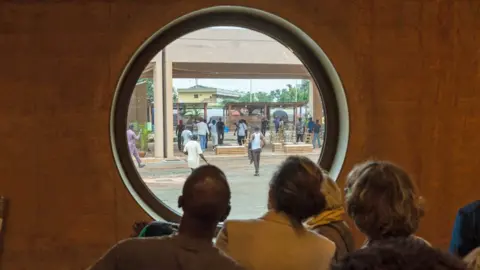
Nigeria's remarkable new West African Art Museum (Mowaa) has landed in the crosshairs of regional political struggles during the period it was expected to – but was unable – to welcome visitors to the public for the very first time.
The Grand Vision
The 15-acre campus stands in the core of Benin City, administrative center of the southern area of Edo – and includes an historical dig and buildings created by celebrated British-Ghanaian architect Sir David Adjaye, particularly noted for the Smithsonian African American Museum that opened in Washington in 2016.
It has been 60 months in the creation – and is planned to honor both the heritage and the modern times of artistic expression in the locale known for the Benin Bronzes, historical pieces stolen from the royal palace by UK forces in the 1800s.
Preparation and Promise
It is notable – and prior to the planned opening, Mowaa was energetic with workers committed to prove it is a place that can rival well-known art institutions in the West.
Inside conservators precisely revealed artworks from safety materials, checking each artifact and taking thorough notes before positioning them on exhibition areas and bases.
Specialists adjusted climate control systems. In the research lab, officers calibrated devices meant to maintain historical items.
Financial Backing and Economic Vision
The project has been the concept of investor Phillip Ihenacho – now Mowaa's chief executive.
"I hope us to have a significant economic benefit on communities in the vicinity," he stated to journalists, mentioning that he wanted to make this urban center "a cultural destination."
Mowaa, a not-for-profit national foundation, aims at generating over 30,000 work positions and contributing more than $80m per year to the regional creative economy through collaborations and events.
Funding Sources and Political Challenges
It has needed $25m to achieve this stage – funds collected from multiple supporters, such as the international partners, the British Museum and the regional authorities.
But currently the regional administration has pulled the rug from beneath it – terminating the use of the site on which the facility was constructed.
An Edo state spokesperson explained this was because in the early agreements it had referred to itself as Edo Museum of West African Art – and it had subsequently dropped "the regional name" from its designation.
Demonstrations and Government Action
This announcement was preceded by protests on Sunday, when activists entered the complex insisting it be called the Museum of the Benin Kingdom.
A boisterous group insulted foreign guests at the facility before the launch – requiring them to be escorted out under police escort.
President Bola Tinubu has additionally intervened to work to address the conflict, creating a special task force to do some damage control.
Administrative Challenges
But in what way has this evolved into so controversial – and such a public relations crisis?
The majority of it comes down to internal conflicts at a regional government level, as it was the ex-administrator Godwin Obaseki – whose administration concluded last year – who was a major backer of the initiative.
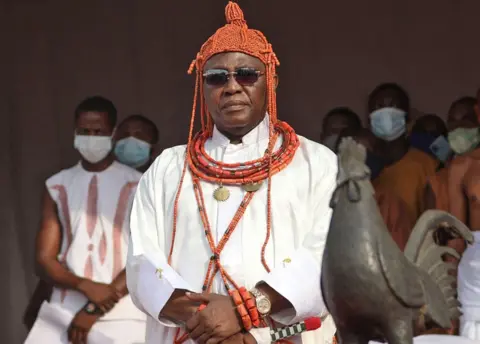
And it seems the administration of the recently elected official, a strong supporter of the local traditional ruler, referred to as the Oba, may want increased control in the initiative. The demonstrators on the weekend, for case, were insisting that the institution be positioned under the authority of Oba Ewuare II.
The Benin Bronzes Controversy
This brings into focus the contentious issue of the historical artworks, one of the continent's most celebrated cultural treasures.
Because although the institution does eventually welcome visitors, these artifacts will be conspicuously absent.
They are metal, elephant tusk and wooden artworks that once embellished the king's residence of the ancient kingdom before UK forces looted them in 1897 during a punitive expedition.
Nowadays, thousands continue to be distributed across galleries in the West -- featuring the London museum, Berlin's Humboldt Forum and the Metropolitan Museum of Art.
Return Initiatives
Their repatriation has become one of the most disputed discussions in the international art community. About 150 have presently been returned – and additional are expected to return.
When proposals for the facility in Benin City were first announced in the pre-pandemic era, the influential figures on the country's cultural sector anticipated it would become their perfect venue – a advanced facility to display them to the world.
But the waters were muddied recently after the central administration announced that the Oba would be the proper guardian of repatriated artifacts – and the monarch's court campaigned for a facility under the royal family's direct control, contrary to the desires of the former governor.
Strategic Positioning
This left Mowaa in a difficult situation: asserting a clear stance on restitution while staying tactful on custodianship – and stressing its larger purpose, which led to|c


